Where to Find Guaranteed Snow in Himachal This Christmas (December 2026)
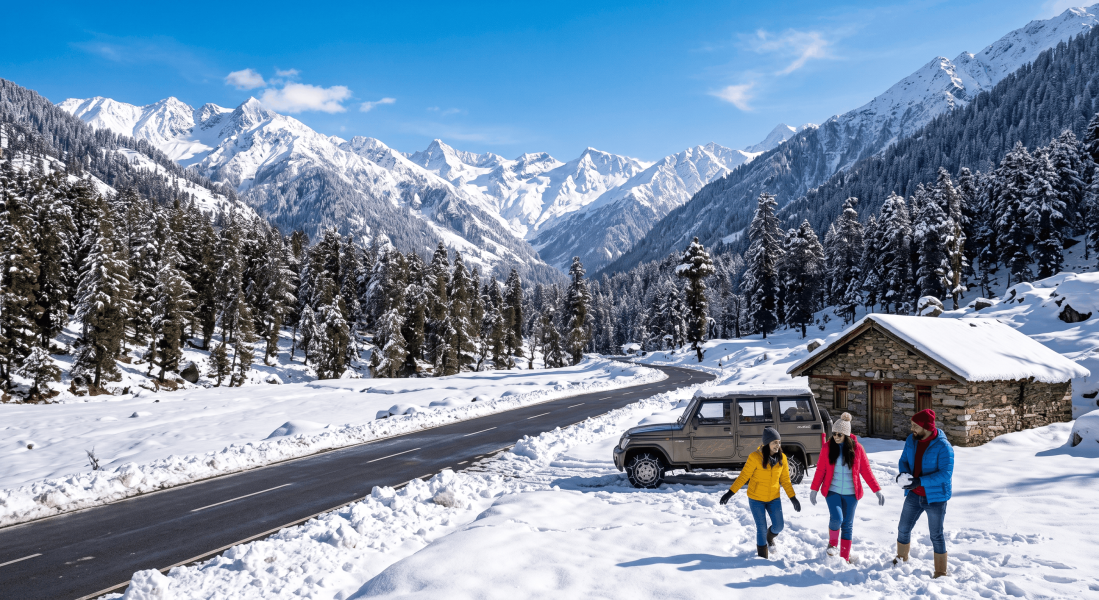
Planning a white Christmas in the mountains sounds dreamy until you arrive in Shimla or central Manali only to find dry tarmac, cloudy skies, and bumper-to-bumper tourist traffic.
In late December, lower hill stations rarely see ground snow anymore due to shifting Western Disturbance patterns across the Western Himalayas. If you want fresh snow under your boots rather than dirty roadside frost, you need to head above 9,000 feet. Planning a successful himachal trip in december means picking high-altitude pockets where sub-zero temperatures reliably hold thick snow cover through Christmas week.
Why Doesn't it Snow in Shimla and Manali Town on Christmas?

Many travelers assume that every hill town in Himachal turns white by late December. In truth, Shimla sits at roughly 2,205 meters (7,234 feet) and Manali town sits around 2,050 meters (6,725 feet).
Historical winter climate summaries from the India Meteorological Department (IMD) show that valley floors at these altitudes rarely get consistent snowfall before mid-January. Instead, late December in the main town markets brings chilly sunny days, dry northern winds, and freezing nighttime temperatures. To find actual snowdrifts, you must drive up to high mountain passes or cross the Pir Panjal range into the tribal valleys.
Which Destinations Guarantee Snow for Christmas 2026?
If seeing live flurries and playing in thick powder is non-negotiable for your holiday, aim for these four mountain zones:
Can You Find Thick Snow Just Past the Atal Tunnel in Sissu and Lahaul?
Yes, crossing the 9.02-kilometer Atal Tunnel under the Rohtang Pass takes you straight into the Lahaul Valley. While the south portal near Solang can remain mostly dry, the north portal opens into a high-altitude rain shadow where temperatures regularly sink past -10°C in late December.
-
Sissu (3,120 meters): The open meadows along the Chandra River and around the Sissu waterfall freeze solid by mid-December, holding guaranteed, untouched snow.
-
Tandi and Keylong: Drive a little further north along the Manali-Leh highway to find silent, snow-covered hamlets far away from holiday mall crowds.
-
Day-Trip Reality: Most families and corporate travelers prefer staying in Manali and making an early morning day run through the tunnel to play in Lahaul's snow before returning by evening.
Does Rohtang Pass or Gulaba Stay Open for Snow Seekers?
The road over Rohtang Pass (3,978 meters) officially shuts down to regular passenger vehicles by late November or early December once heavy blizzards bury the highway. However, the district administration in Kullu permits day visitors up to the snow barriers.
-
Gulaba Barrier & Marhi: Depending on snow levels, police checkposts allow registered commercial cabs to drive up to Gulaba or Marhi (around 3,300 meters).
-
Guaranteed Ice and Powder: These upper slopes hold deep snow by Christmas, making them the primary hub for snow tubing, sledding, and ski rentals.
-
Permit Check: Vehicles must hold a valid Rohtang online pass issued by the Kullu district portal to pass the Gulaba barrier.
Is Spiti Valley Feasible for Travelers Wanting an Extreme White Christmas?
For college students and adventure travelers equipped for rugged conditions, Spiti Valley is completely transformed into an arctic wonderland by late December.
-
The Only Route: The Manali-Kaza highway closes via Kunzum Pass in autumn. You must take the longer, year-round Hindustan-Tibet road from Shimla through Kinnaur (via Reckong Peo, Pooh, and Nako).
-
Guaranteed Frozen Landscapes: Villages like Tabo, Dhankar, and Kaza sit above 3,600 meters. The Spiti River freezes into sheets of ice, and every mountain face is blanketed in dry, powdery snow.
-
Tough Living Conditions: Expect basic homestay setups with dry compost toilets, frozen tap pipes, and room heating powered by wood-fired tandoors.
Does Kufri or Narkanda Work for Families Starting from Shimla?
If you are traveling with toddlers or elders and cannot manage long, rough drives into Lahaul or Kinnaur, Narkanda is your best bet in the Shimla district.
-
Hatu Peak (3,400 meters): Located about 60 kilometers past Shimla, Narkanda sits several hundred meters higher than Shimla's Mall Road. The dense deodar forests around Hatu Peak hold early winter snow far better than Kufri.
-
Hatu Temple Hike: While the narrow road up to Hatu Temple can get iced over, the base slopes offer safe, manageable snow play for young kids.
What Vehicle is Essential for Driving on Black Ice in Late December?
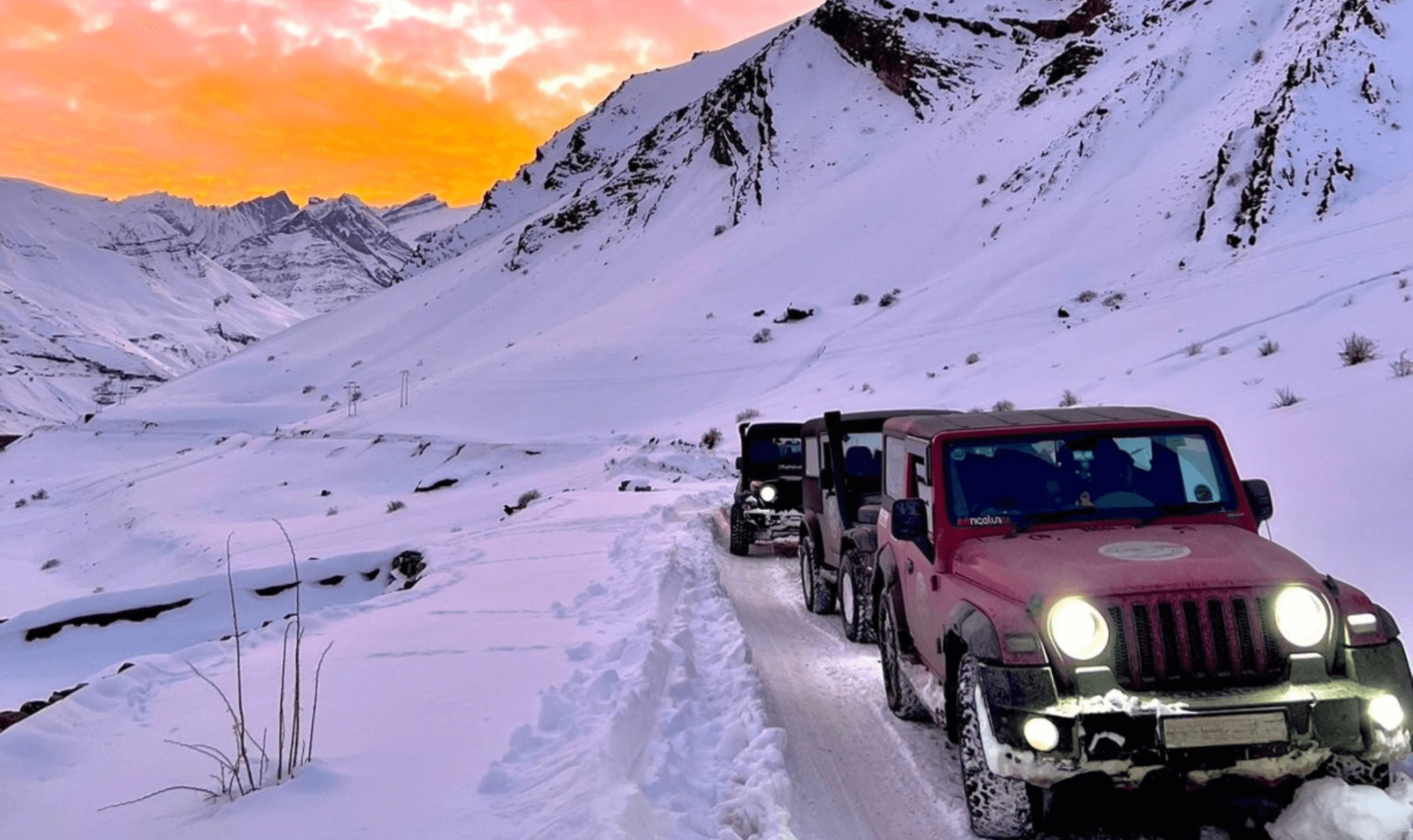
Warming afternoon sun melts roadside snowbanks, sending thin sheets of water across the asphalt. By 4:30 PM, sub-zero air turns that runoff into invisible black ice.
-
Why Front-Wheel-Drive Sedans Struggle: Two-wheel-drive sedans and hatchbacks easily lose traction and spin out on shaded mountain climbs around Dhundi and Marhi.
-
Go for 4x4 or Local Commercial Drivers: For trips across the Atal Tunnel or past Narkanda, hire a dedicated 4-wheel-drive SUV (such as a local Mahindra Scorpio or Gypsy) operated by a mountain-trained driver.
-
Snow Chains: Always verify that your driver carries properly sized tire chains in the boot. Local police at the South Portal checkpost will turn back vehicles without chains during active snowfall warnings.
What Packing Strategy Keeps You Safe in Sub-Zero Weather?
High-altitude winter cold in Himachal is dry, sharp, and unforgiving once the sun dips behind the ridgeline.
-
Strict Three-Layer Rule: Skip heavy, bulky cotton jackets. Wear a moisture-wicking synthetic or merino wool thermal base layer, an insulating fleece mid-layer, and a windproof, waterproof outer shell.
-
Waterproof Snow Boots: Standard flat canvas sneakers or running shoes soak through within ten minutes of walking in deep snow, leaving you vulnerable to painful chilblains or frostnip. Wear high-ankle boots with deep rubber treads.
-
Power Banks and Skin Protection: Lithium-ion phone batteries drain within an hour in freezing temperatures; keep your phone and power banks tucked into inside chest pockets close to body heat. Apply broad-spectrum sunscreen, as mountain snow reflects up to 80% of UV radiation.
Frequently Asked Questions
Can elderly travelers and small children safely cross the Atal Tunnel in late December?
Yes, as long as they stay warm and take things slow. The Atal Tunnel's North Portal sits above 10,000 feet, where the air is colder and thinner than in Manali. Keep stops in Lahaul to two or three hours, carry insulated thermoses with hot water, and return to lower altitudes if anyone shows signs of dizziness or shortness of breath.
Do mobile networks work in snowy areas like Sissu and Keylong during Christmas?
Jio and Airtel provide dependable 4G voice and data connectivity in Sissu, Keylong, and along the approach to the Atal Tunnel. However, severe snowstorms can cause temporary local power outages that knock down rural cell towers for several hours.
Is the road from Shimla to Spiti Valley open during Christmas week?
Yes, the National Highway 5 via Kinnaur is maintained year-round by the Border Roads Organisation (BRO). Short closures can happen for a few hours after heavy rockfall or blizzards near Malling Nallah, but road crews work continuously to clear debris and keep tribal supply lines open.
Are public ATMs reliable in high-altitude snow zones in late December?
No. ATMs in remote winter destinations like Sissu, Kaza, and Narkanda frequently run out of cash or go offline due to frozen power lines and broken internet links. Always withdraw enough paper cash in larger towns like Mandi, Manali, or Shimla before heading higher up.
What should you do if your car gets stranded on icy mountain roads after sunset?
Stay inside your vehicle to shield yourself from freezing winds. Keep your exhaust pipe clear of snowdrifts to prevent deadly carbon monoxide gas from leaking into the cabin while the engine runs for short heating bursts. Call the state emergency response number (112) or the local district disaster management helpline immediately.
Do hotels in Sissu stay open for overnight stays during Christmas?
Most standard hotels and guest houses in Sissu shut down their plumbing systems and close between November and April to prevent burst water pipes. A handful of local homestays and winter camps remain open with bucket-water systems, but most travelers prefer sleeping in centrally heated hotels in Manali.
References
-
India Meteorological Department (IMD), Meteorological Centre Shimla. Winter Climate Trends and Snowfall Patterns in Himachal Pradesh. https://mausam.imd.gov.in/shimla/
-
Border Roads Organisation (BRO), Ministry of Defence, Government of India. Project Deepak: Snow Clearance Operations and Winter Pass Management. https://bro.gov.in/
-
District Administration Kullu, Government of Himachal Pradesh. Atal Tunnel Travel Advisories and Rohtang Tourism Permits. https://hpkullu.nic.in/
-
Himachal Pradesh Tourism Development Corporation (HPTDC). Winter Tourism Protocols and High-Altitude Travel Guidelines. https://himachaltourism.gov.in/