The Ultimate Guide to Rohtang & Inner Line Permits (2026 Edition)
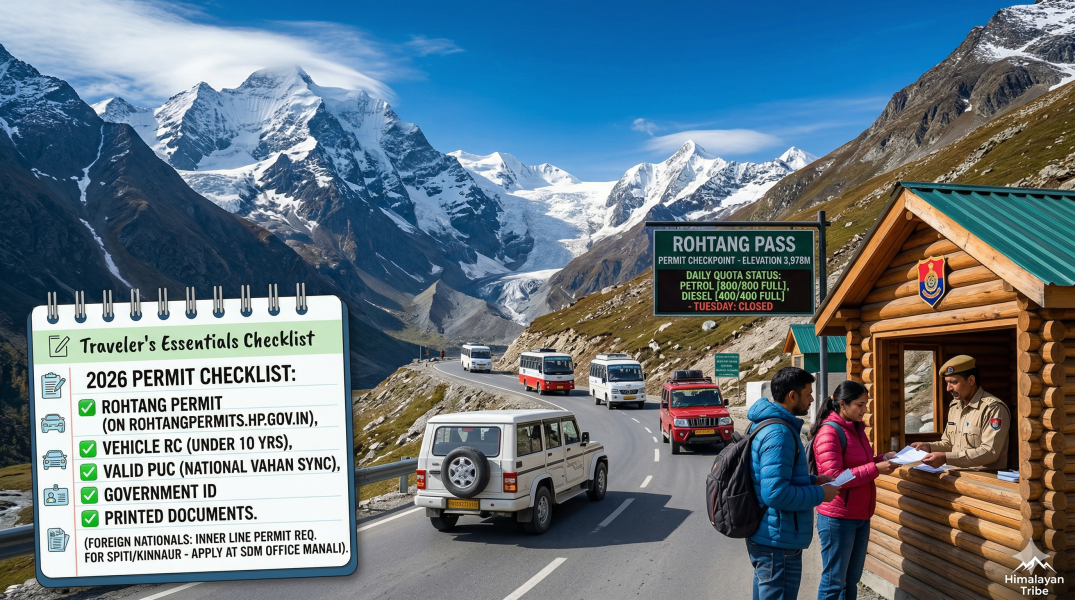
Planning a road trip to the "Land of the Gods" is a bucket-list dream, but in 2026, the gatekeeper isn't just the weather—it's the paperwork. Whether you're aiming for the snow walls of Rohtang Pass or the rugged isolation of Spiti Valley, getting your permits right is the difference between an epic journey and a disappointing U-turn at a checkpoint.
In this guide, we break down the latest 2026 regulations, fees, and "pro-hacks" to ensure your Himalayan adventure stays on track.
1. The Rohtang Pass Permit is Essential for Sightseeing
If your goal is to visit Rohtang Pass from Manali for snow activities and views, you need a Tourism Permit.
Key Rules for 2026:
-
Daily Quota: Strict limit of 1,200 vehicles (800 Petrol, 400 Diesel).
-
Vehicle Age: Your vehicle must be less than 10 years old. The system automatically rejects older RCs.
-
Weekly Limit: Each vehicle can only obtain 3 permits per week.
-
Tuesday Closure: Rohtang Pass remains closed every Tuesday for maintenance. No permits are issued.
Step-by-Step Online Application:
-
Visit the Portal: Go to the Official Rohtang Permit Booking Website. (Note: The administration migrated from the old .nic.in domain to this new .hp.gov.in portal in early 2026).
-
Timing is Everything: Permits are released in two batches: 10:00 AM and 4:00 PM. During peak season (May-June), they sell out within minutes.
-
Required Documents: Keep digital copies of your Vehicle RC, valid Pollution Under Control (PUC) certificate, and a Government ID.
-
Pay the Fee: * Cars/Jeeps: ₹550 (₹500 Permit + ₹50 Congestion Fee)
-
Buses/HMVs: ₹600
-
-
Printout: You must carry a physical printout. Digital copies on phones are often rejected at the Gulaba Checkpost.
Expert Tip: If you are just passing through Rohtang to get to Lahaul, Pangi, or Leh, you can apply for the e-Aagman Movement Permit. It is cheaper, but you must cross the checkpost within the specified time window.
2. The Inner Line Permit (ILP) For the Borderlands
If your itinerary includes the remote loop of Kinnaur and Spiti (specifically the stretch between Rekong Peo and Kaza), you may need an Inner Line Permit.
Who Needs an ILP?
-
Indian Citizens: In 2026, Indian nationals do not require an ILP for most parts of Spiti and Kinnaur. However, always carry a valid Aadhar card for registration at police checkposts.
-
Foreign Nationals: Mandatory for the protected areas bordering Tibet (Khab, Sumdo, Tabo, Kaza).
How to Get It (Foreigners Only):
While some states have moved to online ILPs, Himachal still largely requires an in-person visit to verify original documents.
-
Where to Apply: * SDM Office, Manali (Best if starting from the Manali side).
-
DC Office, Rekong Peo (Best if coming via Shimla).
-
-
Online Pre-Registration: Foreigners can speed up the process by pre-registering on the MHA e-FRRO Portal, though a physical visit to the SDM/DC office is still required to get the final stamp.
-
Cost: Usually around ₹200–₹500 as a contribution to local development funds.
3. 2026 Checklist - Avoid These Common Rejections
To ensure your "Himalayan Tribe" journey starts smoothly, double-check these 2026 specific requirements:
-
PUC Validity: The booking portal now syncs with the Parivahan National Database. If your PUC is expired there, the Rohtang portal will block your transaction.
-
IP Address Limit: The portal allows only 2 permits per IP address per week. Use your mobile data instead of hotel Wi-Fi to book.
-
Name Match: The name on the permit must exactly match your ID.
Why Book Your Himachal Trip with a Trusted Partner?
Navigating government portals at 10:00 AM on a Tuesday can be stressful. At Himachal Tourism Travel, we handle the logistics so you can focus on the views. Our packages from Delhi include pre-cleared permits, verified 4x4 vehicles, and stays in the most scenic corners of the state.
Ready to explore? Check out our spiti valley tour packages or shimla kullu manali tour package
Disclaimer: Permit rules are subject to change by the District Administration of Kullu and Lahaul-Spiti. Always check the official Kullu District Administration Website for the most real-time updates.