Top Things to Do in Spiti in September
September is widely considered the golden window for exploring Spiti Valley. The monsoon rains that wash out lower Himachal begin to recede, the skies turn an intense, cloudless cobalt blue, and the tourist hordes of June and July have cleared out.
Because Spiti sits in a trans-Himalayan rain shadow, the valley stays arid while the poplar and willow trees along the Spiti and Pin rivers begin turning bronze and gold. Both mountain corridors—the gradual climb from Kinnaur via Shimla and the rugged pass from Manali via Kaza—are fully operational before winter snow arrives in late October.
If you are planning an expedition this month, here are the top things to do in Spiti in September, along with the road realities you need to know.
1. Camp Under the Milky Way at Chandratal Lake
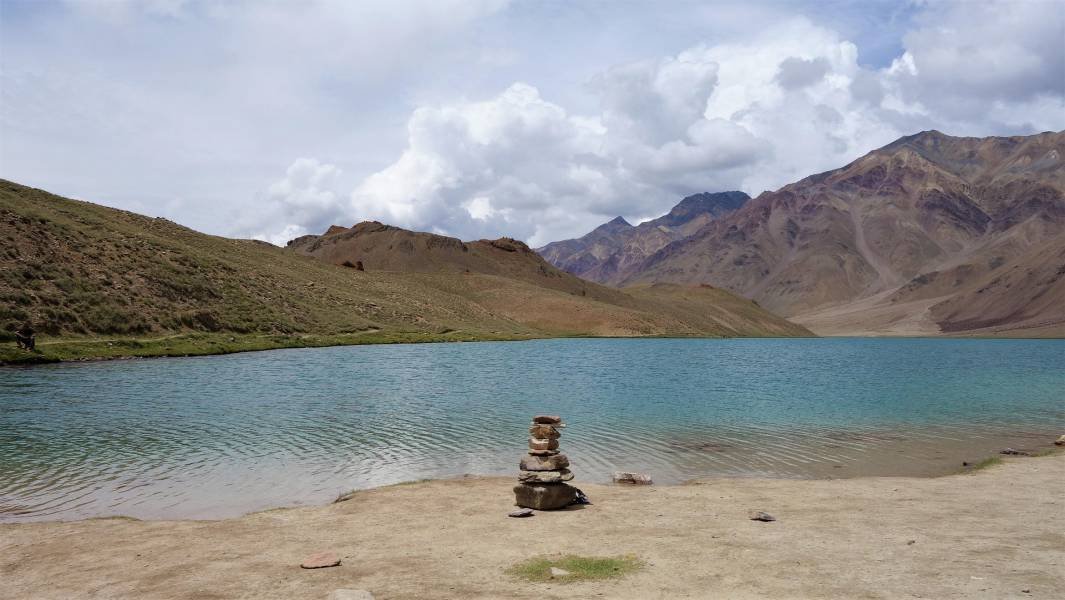
Sitting at 4,300 meters (14,100 ft), Chandratal—the "Moon Lake"—is an emerald-to-sapphire crescent surrounded by scree slopes and snowy peaks.
September delivers the year's best atmospheric transparency. Free from monsoon humidity, the night sky transforms into an unpolluted astrophotography canvas where the core of the Milky Way is visible to the naked eye.
-
The Reality: Camping directly on the lakeshore is strictly prohibited by forest authorities to protect the fragile wetland ecology. Tented camps operate 3 to 4 km away.
-
September Tip: Book during the first three weeks of the month. By the last week of September, night temperatures dip below freezing, and camp operators begin packing down their seasonal infrastructure for the winter.
2. Climb to the Historic Perch of Key (Kee) Monastery
Rising like a layered fortress on a conical hill 4,166 meters above sea level, Key Monastery is the largest and most prominent center of Buddhist learning in Spiti.
Inside, ancient assembly halls are lined with centuries-old thangkas, stucco murals, and wind instruments. In September, the valley floor below mirrors a patchwork of harvested barley fields framed by the winding, turquoise Spiti River.
-
What to do: Arrive around 6:00 AM to sit quietly in the prayer hall during morning chanting sessions. Monks often welcome visitors with piping hot cups of traditional butter tea.
3. Cross the High-Altitude Kaza Village Circuit (Langza, Komic, Hikkim)

Perched between 14,200 and 15,000 feet above Kaza, these high-altitude villages are accessible on a single day loop:
-
Langza: Guarded by a massive, golden Buddha statue overlooking the snow-capped Chau Chau Kang Nilda peak. The mud slopes around Langza are rich with marine ammonite fossils (locally called chaukila) from the prehistoric Tethys Sea floor. Admire them in the soil, but leave them where they lie to preserve the heritage.
-
Komic: One of the highest motorable villages in the world, home to the Lundup Tsemo Gompa.
-
Hikkim: Home to the world's highest operational post office. Bring a few postcards and drop them into the red letterbox for a classic postal stamp from 14,567 feet.
4. Drive Through Pin Valley and Stay in Mudh Village

Pin Valley branches off the main Spiti highway near Attargo and feels like an entirely separate world. Surrounded by high, jagged mountains of Pin Valley National Park, it is home to ibex, bharal (blue sheep), and elusive snow leopards.
The drive to Mudh—the last motorable settlement in the valley—takes you alongside the rapid, silt-heavy Pin River. By mid-to-late September, the valley’s sea-buckthorn bushes turn bright orange, contrasting with the riverbed and white-washed mud homes. Spend a night in a family-run homestay in Mudh to experience authentic Spitian hospitality and fresh local buckwheat rotis.
5. Walk the Cliffside Ledges of Dhankar Monastery and Lake
Few structures in the Himalayas are as dramatically located as Dhankar Gompa. Built atop a precarious cliff 300 meters above the confluence of the Spiti and Pin rivers, this ancient fortress-monastery dates back over a thousand years.
From the monastery, a steep, 45-to-60-minute hiking trail leads up to Dhankar Lake (4,270 m). In September, the weather is crisp and dry, making the uphill trek far more manageable than during the scorching midday heat of midsummer. The still glacial lake mirrors the surrounding jagged spires like glass.
6. Stand Above the Chicham Suspension Bridge
Connecting the villages of Kibber and Chicham, this 120-meter steel suspension bridge hangs 150 meters (nearly 500 feet) over the deep Samba Lamba gorge.
Before its completion, locals had to rely on a manual, hand-pulled rope trolley to ferry people and supplies across the sheer canyon. Walking across the bridge in the dry September winds offers dizzying, open views straight down into the rocky chasm.
7. Discover Thousand-Year-Old Mud Murals at Tabo Monastery
Often called the "Ajanta of the Himalayas," Tabo Monastery was founded in 996 CE and is recognized as a UNESCO World Heritage site. Unlike the fortress-like hilltop gompas of Key and Dhankar, Tabo is built on the flat valley floor out of mud and sun-dried bricks.
Its nine temple chambers house remarkably preserved stucco sculptures, life-sized bodhisattvas, and intricate wall murals. The mud walls naturally insulate the interiors, keeping them cool and quiet. Just across the road on the adjacent cliff face, you can climb up to explore the Tabo meditation caves used by monks for over a millennium.
8. Pay Homage to the 500-Year-Old Mummy at Giu
Tucked near the Indo-Tibetan border between Sumdo and Tabo is the quiet village of Giu.
Here sits the naturally preserved mummy of Sangha Tenzin, a 15th-century Buddhist monk. Preserved without artificial embalming chemicals through natural desiccation and low humidity, the monk sits upright in a meditative lotus posture inside a climate-controlled glass enclosure. Most hurried travelers bypass the 10 km detour from the main highway, making September an uncrowded time to visit.
Essential September Route & Acclimatization Logistics
-
The Ideal Circuit (Shimla In, Manali Out): For proper altitude acclimation, enter via Shimla, Kinnaur (Kalpa/Sangla), Nako, and Tabo, ascending gradually before reaching Kaza (3,800 m). Exit via the rugged Kunzum Pass, Batal, and the Atal Tunnel into Manali.
-
Batal to Gramphu Road Conditions: While the Kinnaur highway is largely paved, the stretch between Kunzum Pass, Batal, and Gramphu remains an unpaved, boulder-strewn water-crossing gauntlet. By September, water levels at glacial nullahs (like Chota Dhara) drop compared to peak July melt, making crossings easier for high-ground-clearance SUVs and adventure bikes.
-
Night Temperatures: Pack thermal base layers, a fleece, and a down jacket rated for sub-zero conditions. Daytime temperatures in Kaza hover comfortably around 15°C to 18°C, but night temperatures plummet to 0°C to -4°C, particularly near Chandratal and Losar.
Planning a Seamless Spiti Trip from Delhi in September
Executing a Spiti trip from delhi during September requires balancing altitude acclimatization with road strategy. The classic full-circuit route covers roughly 1,700 to 1,800 kilometers across 8 to 10 days, starting from the plains of Delhi via NH 44 before climbing into the rugged trans-Himalayan ranges.
To prevent acute mountain sickness (AMS), the safest approach is the gradual clockwise circuit: drive from Delhi to Shimla, then head east through the dramatic river gorges of Kinnaur (stopping in Sangla or Kalpa) before entering lower Spiti at Tabo. This slow ascent gives your body essential time to adjust to elevations crossing 12,000 feet. For travelers taking self-drive SUVs or hiring private 4x4 cabs, plan an early 4:00 AM rollout from Delhi to beat the urban gridlock around Murthal and the Ambala stretch. If you rely on public transit, overnight HRTC Volvo buses run directly from Kashmiri Gate ISBT in Delhi to Shimla, where you can connect onward to Reckong Peo and the daily morning bus into Kaza. The return leg takes you over the rugged Kunzum Pass and down to Manali via the Atal Tunnel, completing a dramatic loop before the final highway sprint back down to Delhi.
Frequently Asked Questions
Is September a good time to visit Spiti Valley?
Yes, September is one of the best months of the year to visit Spiti. The post-monsoon skies offer exceptional clarity for mountain viewing and photography, road access from both Kinnaur and Manali remains open, and the heavy summer tourist rush has departed.
Will Kunzum Pass and Chandratal be open in September?
Kunzum Pass and the access track to Chandratal are generally open throughout September. However, seasonal campsites near Chandratal begin shutting down operations around late September in anticipation of early winter snowfall.
Do I need an Inner Line Permit for Spiti Valley?
Indian nationals do not require an Inner Line Permit for the standard Spiti Valley circuit. Foreign nationals require a Protected Area Permit (PAP) to travel between Reckong Peo (Kinnaur) and Tabo via Sumdo, which can be arranged in Shimla, Reckong Peo, or Kaza.
Can I do the Spiti circuit in a hatchback or sedan in September?
While the Shimla-to-Kaza route is largely tarmac and doable in standard cars, the stretch between Kaza, Kunzum Pass, and Manali features unpaved gravel tracks and river crossings. A high-ground-clearance vehicle (SUV or cross-over) is strongly recommended to prevent underbody damage.