Best Kinnaur Trip Package in October
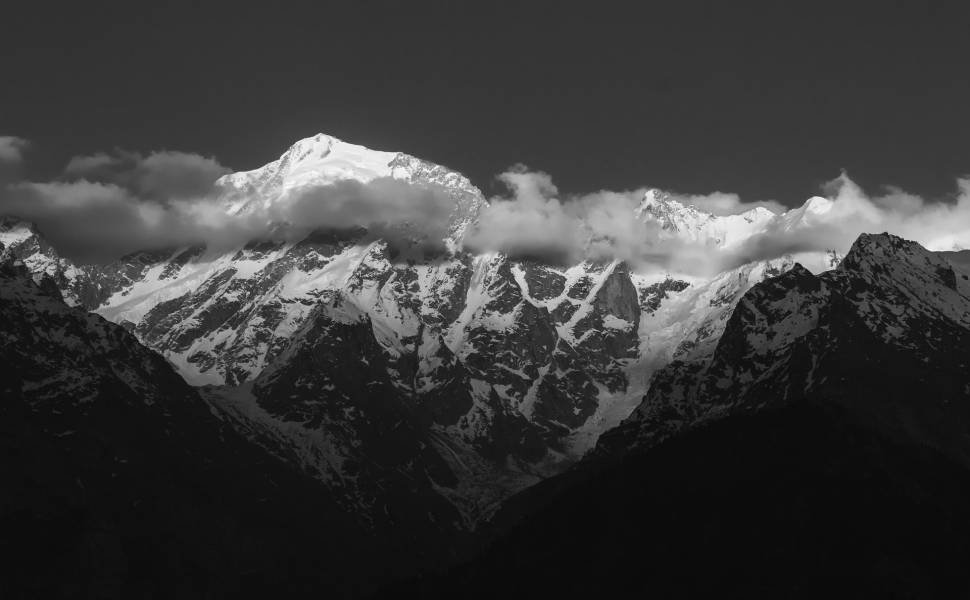
October transforms the district of Kinnaur into one of the most rewarding mountain destinations in North India. The monsoon retreats completely by late September, ending the threat of frequent roadblocks along National Highway 5 (the historic Hindustan-Tibet Road).
During this month, apple orchards across Sangla, Kalpa, and Ribba hang heavy with late-harvest Kinnauri apples. The skies clear up, offering razor-sharp views of the sacred Kinner Kailash massif.
For corporate teams seeking a distraction-free work break, families looking for comfortable cultural road trips, and college groups chasing dramatic border landscapes, a Kinnaur trip in October hits the right balance between crisp weather and accessible roads.
                             ┌─────────────────────────┐
                             │    DELHI NCR / CHANDIGARH│
                             └────────────┬────────────┘
                                          │  NH-5 via Solan & Shimla
                                          ▼
                               ┌──────────────────────┐
                               │       NARKANDA       │ (Hatu Peak, Apple Belts)
                               └──────────┬───────────┘
                                          │  Rampur Bushahr
                                          ▼
                               ┌──────────────────────┐
                               │   JEORI / SARAHAN    │ (Bhimakali Temple)
                               └──────────┬───────────┘
                                          │  Enter Kinnaur (Wangtu / Karcham)
                                          ▼
                        ┌─────────────────┴─────────────────┐
                        │                                   │
                        ▼                                   ▼
              [BASPA VALLEY BRANCH]               [SUTLEJ VALLEY ROUTE]
                        │                                   │
              ┌──────────────────┐                ┌──────────────────┐
              │  SANGLA & CHITKUL│                │RECKONG PEO /     │
              │  (2,680m–3,450m) │                │KALPA (2,759m)    │
              └──────────────────┘                └─────────┬────────┘
              (Last Village of India)                       │
                                                  (Kinner Kailash Sunrise)
                                                            │
                                                            ▼
                                                  ┌──────────────────┐
                                                  │   UPPER KINNAUR  │
                                                  │   (POOH & NAKO)  │
                                                  └─────────┬────────┘
                                                            │
                                                            ▼
                                                   [EXPEDITION ROUTE]
                                                 Tabo • Kaza • Spiti Valley
Why Is October the Best Month to Visit Kinnaur?

October is widely regarded by Himalayan road-trippers as the cleanest travel window of the year.
-
Stable Roads and Zero Monsoon Disruptions: National Highway 5 cuts through rocky cliffs between Jeori, Wangtu, and Powari. In July and August, rain triggers falling rocks and mudslides. By October, the soil dries out, rock faces stabilize, and the Border Roads Organisation maintains smooth connectivity.
-
Peak Harvest Season: Kinnaur is famous for producing crisp, royal-grade apples. In October, local packing sheds operate in full swing across Sangla and Kalpa, and you can buy freshly picked fruit directly from farmers along the road.
-
Crystal-Clear Himalayan Panoramas: High-altitude haze disappears. From Kalpa, the Kinner Kailash peak (standing at 6,050 meters) reflects dramatic gold and pink hues every morning at sunrise.
-
Autumn Foliage: The Baspa River valley fills with golden-yellow willows and deep red apricot leaves, giving photographers striking natural contrast against snow-draped ridge lines.
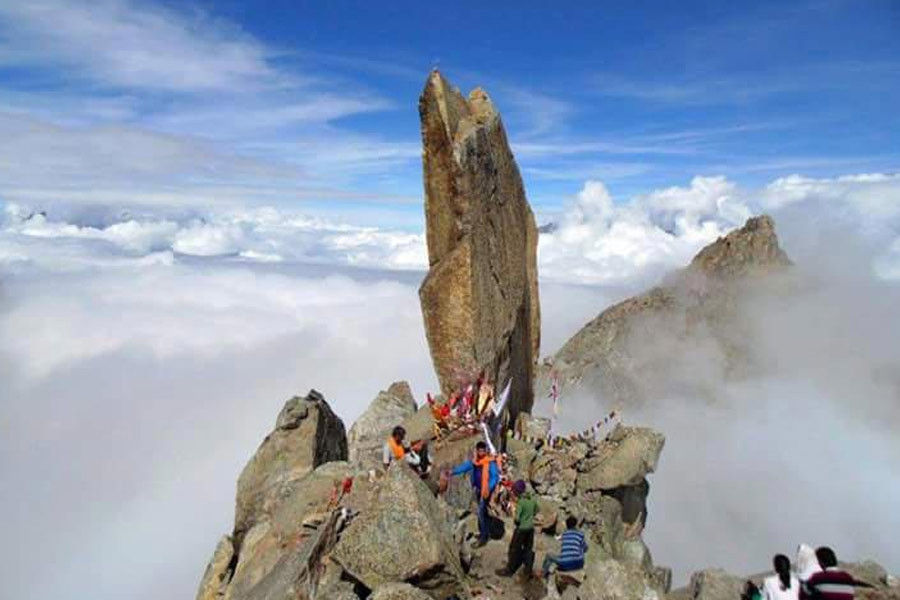
How to Choose the Right Kinnaur Package for Your Group?
Kinnaur offers options ranging from relaxed 7-day cultural loops to rugged 12-day trans-Himalayan overland expeditions. The right package depends on your starting hub and who you travel with.
For Families and Senior Travelers
Families traveling with children or elders need gradual altitude gain and short daily driving hours.
Starting from the plains, the Delhi-Shimla-Kinnaur Valley 7-Day Tour or the Chandigarh-Shimla-Kinnaur Circuit is the safest setup. It stages night halts at Narkanda and Sarahan (home to the historic wood-and-stone Bhimakali Temple) before entering higher altitudes at Sangla (2,680 meters) and Kalpa (2,759 meters).
For Corporate Teams and Professionals
If you have a week of leave and want a smooth, scenic drive with reliable stays, book a dedicated Chandigarh to Kinnaur Trip.
Flying into Chandigarh's Shaheed Bhagat Singh International Airport cuts out 5 to 6 hours of highway driving through Haryana, letting you hit the Himalayan expressway early in the morning. It leaves plenty of downtime for quiet riverside evenings in Rakchham and village walks in Roghi.
For College Groups and Adventure Seekers
If your group wants to explore high mountain passes and cold desert plateaus, link Kinnaur with Spiti Valley.
You can set out on a Kinnaur & Spiti trip from Chandigarhor a Delhi to Kinnaur & Spiti Valley Tour. This route takes you past Nako Lake, the 1,000-year-old Tabo Monastery, Dhankar, Kaza, and Key Monastery before exiting through the Atal Tunnel into Manali.
Explore all regional options on the Kinnaur Destination Page to tailor your stops.
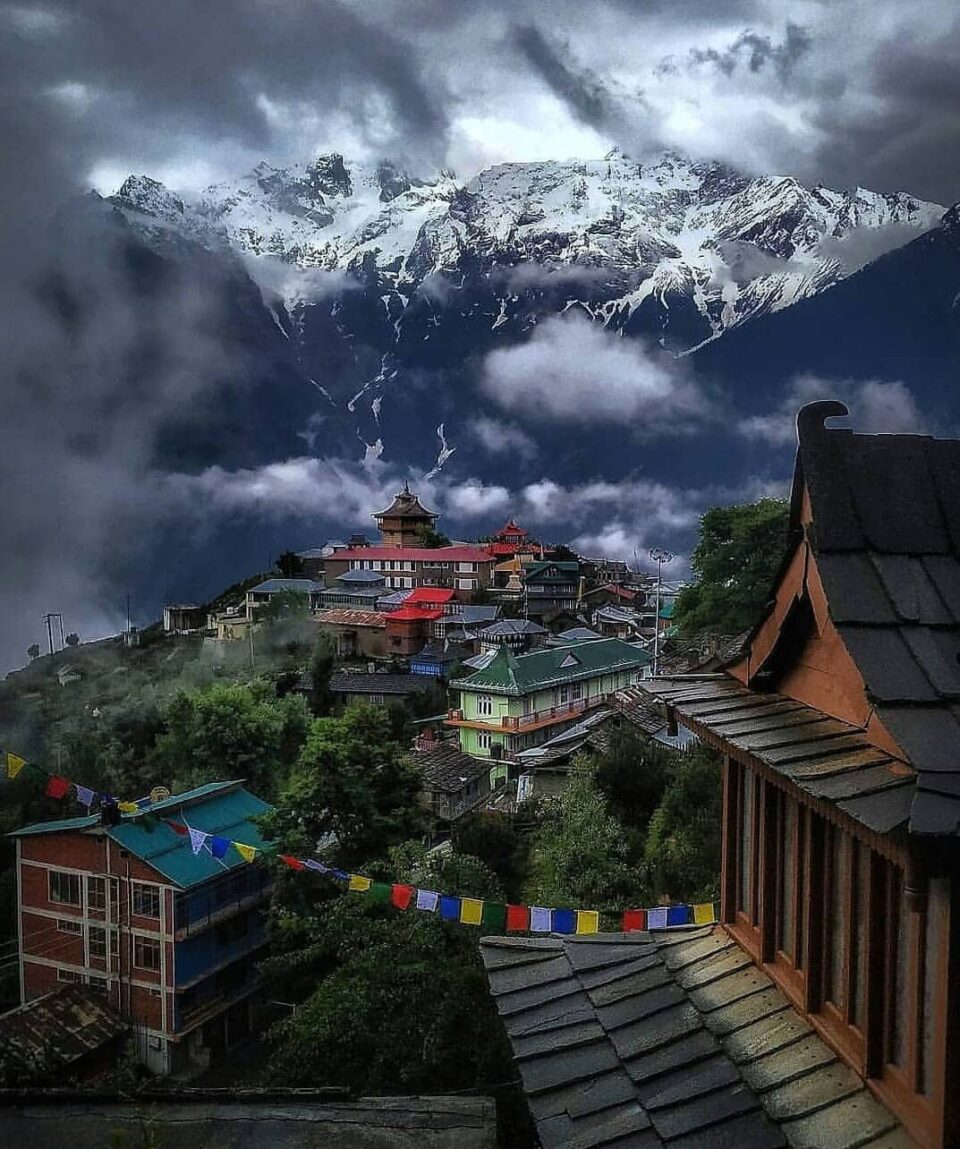
What Does a Well-Paced 7-Day Kinnaur Itinerary Look Like?
A common mistake is driving straight from the plains into deep Kinnaur in a single push. That causes travel fatigue and heightens the risk of mountain sickness. Here is how a balanced October itinerary flows:
Day 1: Chandigarh/Delhi to Narkanda (Elevation: 2,708 meters)
Drive past the Himalayan Expressway via Solan and Shimla to reach Narkanda. Stopping here avoids the heavy city traffic of Shimla and helps your body begin adjusting to the altitude. Visit Hatu Peak in the evening for a wide view of the Central Himalayan ranges.
Day 2: Narkanda to Sangla via Sarahan (Elevation: 2,680 meters)
Descend along the winding banks of the Sutlej River to Rampur Bushahr, then take a short climb to Sarahan to view the sacred Bhimakali Temple. Cross into Kinnaur at Wangtu, follow the turquoise Baspa River past Karcham Dam, and check into your camp or hotel in Sangla Valley.
Day 3: Excursion to Chitkul and Rakchham (Elevation: 3,450 meters)
Spend the morning driving 24 km deeper into the valley to Chitkul, the last motorable village near the Indo-Tibetan border. Walk through traditional slate-roofed wooden houses, visit the local Mathi Temple, and take a riverside stroll along the Baspa River. On the way back, stop at the pine forests of Rakchham before spending the night in Sangla.
Day 4: Sangla to Kalpa via Kamru Fort (Elevation: 2,759 meters)
Visit the multi-tiered Kamru Fort in Sangla, which served as the ancient seat of the Bushahr kingdom. Drive toward Reckong Peo, the administrative hub of Kinnaur, and climb up to the heritage village of Kalpa. Check into your stay and watch the sunset cast an amber glow on the Kinner Kailash peak.
Day 5: Exploring Kalpa and Roghi Village
Spend a relaxed day exploring the Hu-Bu-Lan-Kar monastery and the Narayan-Nagini temple complex. Take a gentle drive or 3 km walk to Roghi Village, passing the sheer vertical rock wall known as the Suicide Point. Spend the afternoon strolling through local apple orchards and sampling traditional butter tea.
Day 6: Kalpa to Rampur or Chail
Begin your return leg by retracing NH-5 down along the Sutlej basin. Break your journey at Rampur or Chail to keep driving hours under 6 hours, giving everyone a comfortable evening.
Day 7: Return to Chandigarh or Delhi
Head back down through the four-lane highway to Chandigarh or Delhi for your evening flight or train connection.
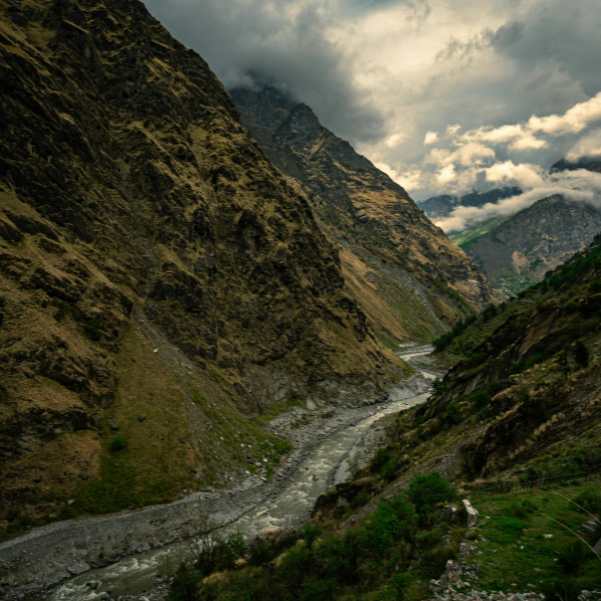
What Should You Pack for Kinnaur in October?
October brings crisp sunshine during the day, but high-altitude temperatures drop fast once the sun dips behind the ridge lines.
-
Layered Clothing: Pack thermal base layers, comfortable fleece pullovers, and a windproof, down-filled outer jacket. Chitkul and Kalpa frequently see night temperatures fall between 0°C and 4°C in mid-to-late October.
-
Sun and Eye Protection: Thin mountain air means strong ultraviolet exposure. Pack a wide-brimmed hat, SPF 50 sunscreen, and UV-rated sunglasses.
-
Footwear: Bring sturdy walking shoes or hiking boots with strong rubber lug soles for walking on loose gravel and village stone paths.
-
Cash: Digital payment networks can be spotty past Reckong Peo. Withdraw adequate cash in Shimla, Rampur, or Reckong Peo for local purchases, small eateries, and souvenirs.
Frequently Asked Questions About Kinnaur Trips in October
Do Indian citizens need an Inner Line Permit to visit Kinnaur?
No, Indian citizens do not need an Inner Line Permit (ILP) to visit tourist areas in Kinnaur like Sangla, Chitkul, Kalpa, or Nako. Indian travelers only need to carry valid government photo identification (like an Aadhaar Card or Voter ID). Foreign nationals, however, require an Inner Line Permit to travel past Jangi toward Spiti Valley or near border areas.
How cold does it get in Kalpa and Chitkul during October?
Daytime temperatures in Sangla and Kalpa stay pleasant, ranging between 12°C and 18°C under clear skies. However, nights get quite cold, with temperatures dropping between 0°C and 5°C. In Chitkul, which sits at an elevation of 3,450 meters, night temperatures can dip below freezing late in the month.
Can small hatchback cars travel safely on the Kinnaur road in October?
While experienced mountain drivers do navigate hatchbacks on NH-5, vehicles with higher ground clearance (such as compact SUVs, full-size SUVs, or Innovas) are much better suited. Certain patches between Jeori and Powari feature uneven gravel, rocky overhangs, and stream crossings that can scrape low underbodies.
Is mobile internet available throughout the Kinnaur Valley?
Reckong Peo, Rampur, and Kalpa have reliable 4G and 5G connectivity on Airtel and Jio networks. Sangla usually has good coverage as well. However, data speeds become patchy in remote spots like Chitkul, Rakchham, and beyond Pooh, where BSNL remains the only carrier with basic calling coverage.
Are medical centers and pharmacies easily accessible in Kinnaur?
Basic medical dispensaries operate in Sangla and Kalpa. The primary regional healthcare facility is the District Hospital located at Reckong Peo. For specific medications, acute mountain sickness treatments, or severe healthcare needs, carry a personal medical kit and remember that major multi-specialty hospitals are in Shimla.
What local food and produce should you try in Kinnaur during autumn?
October is the heart of the fruit season. Do not miss fresh Kinnauri apples, royal delicious varieties, walnuts, dried wild apricots (chuli), and local apple cider. In local homestays and village dhabas, try Tibetan thukpa, hand-rolled momos, and traditional siddu served with fresh ghee.
References
-
Department of Tourism & Civil Aviation, Government of Himachal Pradesh: Official Tourism Guide & Destination Profiles for Kinnaur
-
District Administration Kinnaur, Government of Himachal Pradesh: Kalpa Village Altitude, History and Regional Access
-
The Tribune India: Horticulture and Apple Harvest Reports Across Kinnaur and Shimla
-
India Meteorological Department (IMD), Shimla Centre: Climatological Data and Mountain Weather Tables for Himachal Pradesh