Is It Safe to Visit Jibhi in July? Here Are Answers to All Your Questions
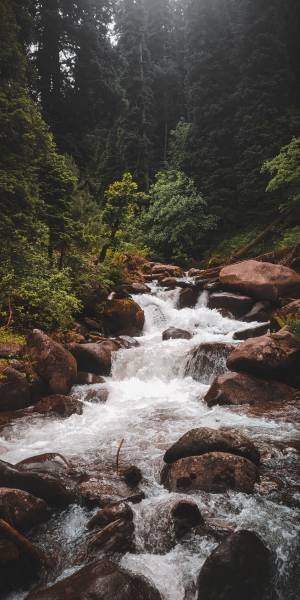
Jibhi doesn't get the same monsoon headlines as Manali or Kasol, but that's exactly why people search for it before they book: there's less information out there, not less risk. This guide answers the practical, specific questions people actually type into Google before a July trip to Jibhi and the wider Tirthan Valley — weather, road safety, parking, connectivity, permits, and what's realistically open versus what you should skip.
What is the weather like in Jibhi in July?
July is deep monsoon season in Jibhi. Daytime temperatures typically sit between 15°C and 22°C, dropping to a cool 13–18°C at night, so it's never hot — it's damp, green, and prone to sudden downpours rather than steady, all-day rain. Most days follow a pattern of clear or lightly overcast mornings with rain building through the afternoon and evening, though this isn't guaranteed; a cloudburst can hit at any hour during an active weather spell.
Because Jibhi itself sits around 1,450–1,600 m, while nearby points like Jalori Pass climb to roughly 3,100 m, weather can differ sharply by altitude on the same day — sunny in the village, socked in with cloud and rain at the pass. Always check conditions for the specific elevation you're headed to, not just "Jibhi weather" as a single number.
Is Jibhi safe to visit in July, overall?
Jibhi village itself — the homestays, cafés, Jibhi waterfall, and river walks — is reasonably safe in July if you stay flexible and avoid pushing into remote or high-altitude areas during active rain. The bigger caution applies to the wider Tirthan/Kullu region: this July has already seen cloudbursts and flash floods in nearby valleys (Garsa, Sainj, and the Parbati side), with local authorities on alert and IMD issuing repeated heavy-rainfall warnings for Kullu district. That doesn't mean Jibhi itself is unsafe — it means the region is in an active monsoon pattern, and decisions about day trips, treks, and river-adjacent activity need to be made day-by-day, not based on a pre-trip plan made weeks in advance.
Is it safe to drive to Jibhi in July? What's the route like?
Most travellers reach Jibhi via Chandigarh–Bilaspur–Mandi–Aut, then a climb through Banjar to Jibhi (roughly NH-3/NH-21 to Aut, then NH-305 onward). In normal July conditions, the Aut–Banjar–Jibhi stretch is a paved, regularly used mountain road, but it narrows considerably past Banjar and is vulnerable to landslides and debris flow during heavy rain spells, same as most Himachal hill roads in monsoon.
The bigger risk in July isn't the Jibhi approach road itself, but the surrounding network: the Aut–Banjar corridor and roads deeper into the valley (toward Larji, Sainj, and Garsa) have a documented history of landslide closures and, in bad years, flash floods that have closed roads for days and stranded vehicles. This July specifically, cloudbursts have already hit the Garsa Valley — adjacent to Tirthan — with local reports of flash floods and a damaged bridge nearby, and IMD has forecast further spells of moderate-to-heavy rain across Kullu district. Treat any drive beyond Banjar as conditional on the day's forecast, not a fixed plan.
Practical route safety steps:
- Fuel up fully in Banjar or Aut — Jibhi village has no petrol station.
- Avoid driving after dark on the Banjar–Jibhi–Shoja stretch during monsoon; visibility and debris risk are both worse.
- If continuing toward Jalori Pass, know that the narrow, winding stretch from Shoja to the pass gets damaged by monsoon rain and is best avoided during or right after heavy rainfall.
- Don't attempt Sainj, Garsa, or Parbati-side detours during an active rain warning — these are the areas seeing the most disruption this season.
- If you're on a self-drive trip, keep a buffer day in Aut or Bhuntar rather than pushing straight through in bad weather.
Is Jalori Pass open and safe to visit in July?
Jalori Pass is technically open and motorable through summer, but July is genuinely the least favourable month to attempt it. The road is narrow, unpaved in patches near the top, and prone to damage after heavy rain; several guides explicitly recommend avoiding the Jalori drive during monsoon unless you're an experienced hill driver with a local guide, and treating it as a bonus rather than the centrepiece of your itinerary. If your dates land after a spell of heavy rain, ask your homestay host about current conditions before setting out — a clear morning in Jibhi doesn't guarantee a clear road at the pass.
If Jalori Pass or the Serolsar Lake / Raghupur Fort treks are inaccessible on your travel days, that's normal for this season, not a sign something has gone wrong with your trip — build a plan B around Jibhi village, the waterfall, and lower-altitude river walks instead.
What tourist attractions are open and worth visiting in Jibhi in July?
- Jibhi Waterfall — a short, easy walk from the village; monsoon actually makes this fuller and more dramatic, though the path gets slippery.
- Chehni Kothi — the centuries-old stone-and-timber tower near Chehni village; an uphill walk of around 30–40 minutes, doable in light rain with decent footwear.
- Tirthan River walks (Gushaini area) — pleasant in July, though the river runs fuller and faster than in dry months, so stay well back from the banks.
- Great Himalayan National Park (GHNP) buffer zone trails — accessible with a permit from the park office, but check conditions first since forest trails turn muddy and leech-prone in monsoon.
- Serolsar Lake and Raghupur Fort treks — only worth attempting if Jalori Pass access is confirmed open and dry on the day; skip during or right after heavy rain.
- Shringa Rishi Temple and Shoja village — low-effort, scenic stops that stay accessible even when higher trails don't.
What's the parking situation like in Jibhi?
Jibhi is a small hillside village, not a town built for high vehicle volume — this is one of the most underrated practical concerns for July visitors. Most homestays and cottages have very limited private parking (often just 1–2 spots), and there's no large municipal parking lot the way there is in Shimla or Manali. A few points worth knowing:
- Confirm parking availability directly with your homestay or cottage before arriving — don't assume it's included.
- The approach road narrows near the village core, so larger vehicles (bigger SUVs, tempo travellers) may need to park a short walk from the actual property.
- During peak weekends, informal roadside parking along the Banjar–Jibhi stretch can add to congestion on an already narrow road — arriving earlier in the day avoids the worst of it.
- If you're travelling in a group with multiple vehicles, mention this when booking so your host can plan for it in advance.
Does mobile network work in Jibhi?
Patchily, and this matters more in monsoon than in other seasons, since a landslide or road issue is exactly when you'd want to make a call. BSNL and Airtel are generally reported as the more reliable networks in Jibhi and the surrounding valley, while Jio connectivity is inconsistent and can drop out completely in low-lying or forested stretches. Practical takeaways:
- Don't rely on your phone for real-time navigation once you're past Banjar — download offline maps in advance.
- Let someone outside the valley know your rough itinerary and expected check-in times, given how easily connectivity drops.
- Ask your homestay if they have a landline or reliable network spot, in case you need to reach emergency services.
Are there ATMs in Jibhi? Should I carry cash?
Yes, carry cash — there are no reliable ATMs in Jibhi village itself. The nearest ATMs, pharmacies, and a government hospital are in Banjar, roughly 20–25 minutes away. Withdraw what you'll need for your stay before heading up from Banjar or Aut, since card acceptance at smaller homestays and local dhabas is inconsistent.
Are leeches and insects a problem in Jibhi during monsoon?
Yes — this is a genuine, if minor, monsoon-specific concern in the forested trails around Jibhi, Tirthan, and GHNP buffer zones, and one that rarely comes up in generic travel guides. Leeches are common on damp forest paths after rain. Practical steps: wear closed shoes (not sandals) on any trail, tuck trousers into socks on longer forest walks, and carry salt or an anti-leech spray if you're planning to trek. It's uncomfortable rather than dangerous, but worth knowing before you're on a muddy trail in shorts.
Is river and stream activity safe near Jibhi in July?
Be more cautious than you would be in a drier month. The Tirthan River and smaller streams (nullahs) around the valley run noticeably fuller and faster in monsoon, and this region has already seen nullahs overflow suddenly during cloudbursts elsewhere in Kullu district this season. Avoid wading into the river, camping directly on the riverbank, or standing close to nullahs during or after heavy rain — flash floods in these smaller streams can rise with very little warning.
Is Jibhi suitable for families, senior travellers, or first-time hill visitors in July?
Jibhi village itself, at a gentle elevation with mostly easy walks, works reasonably well for families and senior travellers even in July, provided the itinerary stays close to the village (waterfall, river walks, Chehni Kothi) rather than pushing to Jalori Pass or high-altitude treks. First-time hill travellers should lean on local homestay hosts for same-day advice on trail and road conditions rather than following a fixed online itinerary — hosts generally know within hours if a route has become unsafe.
Is Jibhi safe for solo travellers and women travelling alone in July?
Jibhi has become a popular stop for solo and women travellers, and the village itself is generally considered low-crime and welcoming, with a strong homestay culture. The main precautions in July are less about personal safety in the village and more about the same monsoon-specific issues everyone faces: avoid isolated forest trails alone during or right after heavy rain, let your homestay host know your day's plan, and avoid being out on unlit stretches of road after dark, since street lighting is minimal outside the main village core.
What should I pack for a July trip to Jibhi?
- A proper rain jacket (ponchos work but are less practical on forest trails)
- Closed, grippy footwear — sandals are a poor choice on wet stone paths and muddy trails
- A light woollen layer for cool evenings
- Cash, since ATMs aren't available in the village
- A powerbank and offline maps, given patchy network
- Anti-leech spray or salt if you're planning any forest trekking
- A dry bag or ziplock for phones, cameras, and documents
Quick answer
Jibhi is safe to visit in July if you keep your plans flexible: stick close to the village and lower-altitude sights on days with active rain, treat Jalori Pass and any Sainj/Garsa-side detour as conditional on the day's forecast, carry cash and offline maps since ATMs and network are unreliable, and check current conditions with your homestay host each morning rather than trusting a fixed itinerary made in advance. Given this July's cloudburst activity in the surrounding Kullu valleys, that day-by-day flexibility matters more than usual this season.
Official sources for weather and road/travel safety updates
- IMD Meteorological Centre Shimla — regional forecasts and bulletins covering Kullu district: https://mausam.imd.gov.in/shimla/
- Himachal Pradesh State Disaster Management Authority (HPSDMA) — monsoon advisories, disaster helplines (State: 1070, District: 1077): https://hpsdma.nic.in/
- District Administration Kullu — local advisories and disaster management updates for Banjar/Tirthan Valley: https://kullu.nic.in/
- Great Himalayan National Park (GHNP) — official permit and trail-access information: https://greaterhimalayannationalpark.com/ (verify current status with the park office before any trek)
- National Highways Authority of India (NHAI) — highway condition updates for NH-305 and connecting routes: https://nhai.gov.in/
Road, weather, and river conditions around Jibhi and Tirthan Valley can change within hours during monsoon. Always confirm with these official sources — and with your homestay host on the ground — on the actual day of travel. or you can rely to a local company for your jibhi trip from delhi, as locals know the history of that location inside-out and will assist you in case on any inconvience.