Delhi to Manali Road Status and Drive-Time Reality - October 2026
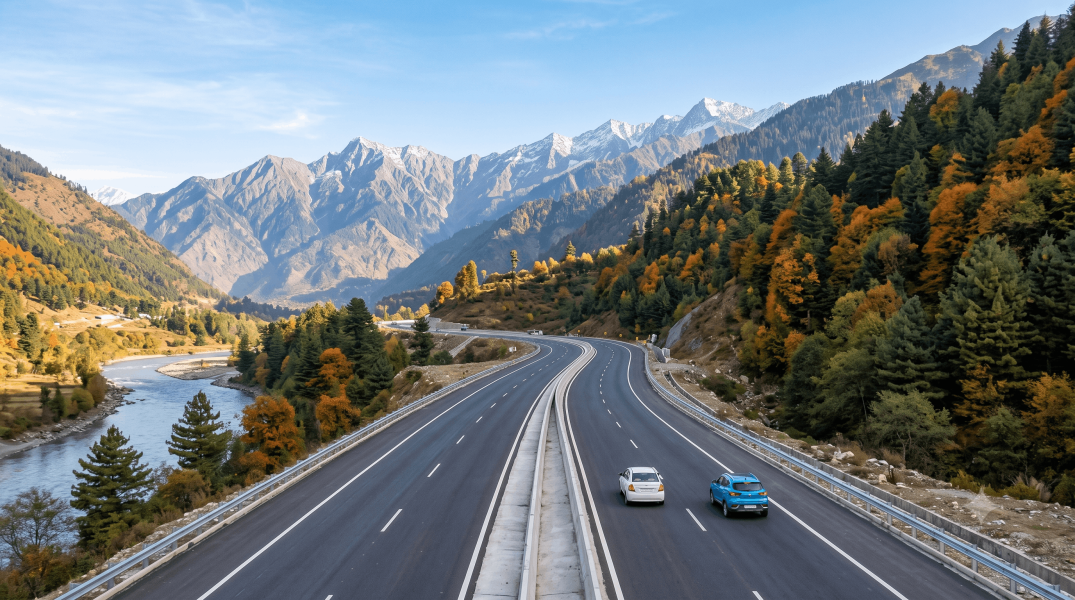
Planning an autumn Manali trip from Delhi offers some of the clearest skies and crispest mountain air of the year. The heavy monsoon clouds have retreated, leaving the Beas river valley vibrant and the asphalt dry. However, the physical reality of the highway differs from what online map algorithms predict. While recent infrastructure improvements have cut travel times dramatically across several sectors, seasonal repairs, patch-worked bypasses, and tunnel management mean you need an accurate, ground-level assessment before loading your car.
Here is the real condition of the corridor and what your actual travel day will look like.
Route Overview and the Current Highway Status
The primary route spans roughly 535 kilometers across National Highway 44 and National Highway 21 (now renumbered along sections as NH 3). Under ideal conditions, experienced drivers can cover the distance in 10 to 12 hours. During peak weekend movements, that number easily stretches past 13 hours.
Delhi (NH 44) ──> Ambala ──> Kiratpur Sahib (Four-lane corridor)
                 └──> Bilaspur bypass ──> Mandi ──> Pandoh-Takoli Tunnels
                 └──> Aut ──> Kullu ──> Manali (NH 3)
The drive divides into two distinct halves. The plains from Delhi through Ambala and Rupnagar are smooth, multi-lane expressways where you can maintain consistent legal cruising speeds. Once you hit the Kiratpur-Nerchowk section, the engineering shifts. The modern four-lane bypasses and tunnels eliminate old hill climbs near Swarghat, but active maintenance zones require strict attention.
Sector Breakdown and Drive Time Realities for Your Manali Road Trip from Delhi
A successful Manali road trip from Delhi comes down to understanding where your average speed drops.
Delhi to Kiratpur Sahib
The 280-kilometer run across the plains on NH 44 and through the Himalayan foothills toward Rupnagar takes about 4.5 hours. Murthal, Karnal, and Kurukshetra provide wide six-lane surfaces. Watch out for occasional morning autumn fog around the Yamuna belt near Panipat, along with active speed enforcement cameras near Ambala.
Kiratpur to Mandi
This used to be the most grueling leg of the drive. The Kiratpur-Nerchowk four-lane section bypasses the notorious truck queues of the old Bilaspur route. It cuts driving time by nearly two hours through a sequence of modern tunnels. However, the post-monsoon cleanup operations are still active. Road crews frequently narrow traffic to single lanes near Mandi Bharari Chowk and Bilaspur bypass to stabilize loose hill cuts. Budget 2.5 hours for this 80-kilometer transition into the hills.
Mandi to Kullu via Pandoh and Aut
This 65-kilometer section represents the most unpredictable zone on the route. The recently inaugurated twin-tube tunnels at Dayod and Hanogi along the Pandoh-Takoli stretch have significantly bypassed historical landslide zones near Jogni Mata Mandir. That progress saves nearly 40 minutes.
Even so, lingering monsoon damage from August and September means temporary road diversions, gravel detours, and single-lane bottlenecks persist around Pandoh Dam and Khotinalla. Heavy tippers and local buses often slow the line to a crawl. Expect this section to take between 1.5 and 2 hours.
Kullu to Manali
The final 40 kilometers along the right bank highway offer scenic, fast blacktop, taking just under an hour. Keep in mind that apple harvest transit peaks in October. Local pickup trucks and tractors frequently enter the carriageway near grain markets and orchards around Raison and Katrain.
Practical Travel Strategies for a Smooth Manali Trip from Delhi
Real-world delays rarely come from bad weather in October; they come from poor departure timing and bad mountain driving habits.
-
Depart Delhi before 4:00 AM. Leaving before dawn ensures you clear the industrial bottlenecks of Kundli and Panipat effortlessly. More importantly, it places you past Kiratpur before heavy commercial transit begins rolling into the hills.
-
Refuel before Mandi. While fuel stations are frequent along the plains, quality high-speed pumps become sparse once you enter the Beas gorge past Pandoh.
-
Respect blind curves and tunnel rules. The newly opened tunnels feature strict speed monitoring. Resist the urge to overtake inside tunnels or across continuous solid lines along the Pandoh bypass; local traffic police actively penalize lane violations.
-
Keep offline maps cached. Mobile reception occasionally drops in deep river canyons between Pandoh and the Aut tunnel portal.
Frequently Asked Questions
Is the road from Delhi to Manali completely four-lane now?
Most of the route from Delhi to Kiratpur and from Nerchowk through parts of Kullu is a modern multi-lane highway. However, the stretch between Mandi, Pandoh, and Takoli still contains ongoing repair detours and single-lane segments following seasonal slope stabilization.
Can I drive a standard hatchback or sedan to Manali in October?
Yes. October features dry asphalt and stable ground conditions. You do not need an SUV or all-wheel-drive vehicle for a Manali trip from Delhi, provided you exercise caution over rough patches around Pandoh.
How much toll should I expect to pay one way?
One-way toll charges for a standard light motor vehicle run approximately 800 to 1,000 Indian rupees between Delhi and Manali. Ensure your FASTag has at least 1,500 rupees in balance to prevent delays at electronic toll plazas.
Do I need special permits to drive into Manali?
No permit is required to drive into Manali town. If you intend to take your vehicle beyond Manali across Rohtang Pass or toward the Lahaul Valley via the Atal Tunnel, verify local administration directives regarding online green passes or tourist quotas.
What is the ideal overnight stop if I do not want to drive continuously?
If you prefer breaking the journey into two relaxed days, Mandi or the town of Bilaspur serves as the most logical halfway stop. Both offer accessible roadside hotels without requiring deep detours off the national highway.
Sources & References
-
National Highways Authority of India (NHAI), Ministry of Road Transport and Highways, Government of India
-
Himachal Pradesh Public Works Department (HPPWD), Road and Bridge Status Bulletins
-
District Administration Kullu, Official Portal for Road Advisory and Travel Guidelines
-
District Administration Lahaul and Spiti, Official Highway Status and Travel Advisory
-
India Meteorological Department (IMD), Regional Meteorological Centre, New Delhi